
Planning
When formulating projects or programmes, Camino Consult facilitates the dialogue between the stakeholders in order to achieve results-driven programmes, both in Belgium and in the client’s geographical working areas. Our starting point is a joint stakeholder analysis and a comprehensive context analysis to identify the key actors and the most relevant trends in the external context. Next, a ‘Theory of Change’ is developed, in which desired future scenarios and changes, change pathways and assumptions are co-created. Finally, the roles, engagements, complementarity and possible synergies between the stakeholders are analysed and defined.
Besides our facilitating role, we use our expertise actively in planning-related tools such as Theories of Change, Log Frames, Future Search Conferences, Appreciative Inquiry, SWOT analyses, risk analyses,etc …
Monitoring, Evaluation and Learning
In order to track the progress and results of a project or programme, it is essential to have an efficient and effective monitoring and evaluation system. We help client organizations to develop systems that, firstly, are intended to measure progress of the predefined changes (outcomes) and indicators and, secondly, to learn form the results and adapt strategies where necessary.
Camino Consult is committed to conduct evaluations that are useful to the different stakeholders (donors, implementing organizations, beneficiaries, etc.). We believe that the objective of an evaluation is to determine what has been achieved (accountability), but also to collaboratively explore ways to improve and innovate future development efforts (learning). Camino Consult balances both functions by:
- focusing on tangible results, measuring quantitative and qualitative key indicators and triangulate information of different stakeholders and data sources.
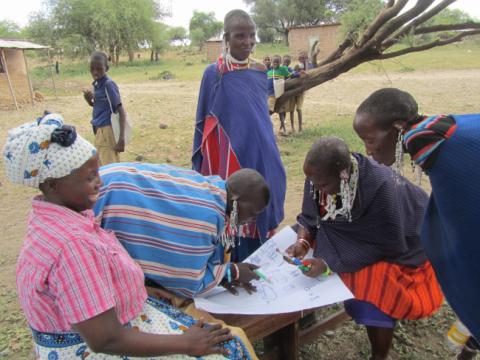
- paying sufficient attention to the participation, in all its forms, of the different stakeholders. A diversity of perspectives improves the quality of the reflection on results and future perspectives, and consequently of the evaluation. Participation also results in greater ownership and increases the chances of effective learning and application of recommended changes.
- linking the evaluation results (focus on the past) to future thinking, by exploring ‘desired future scenarios’. This can lead to innovative new solutions that are difficult to explore during evaluation exercises.
“Identifying future trends is only part of the story. We also need to become more responsive to the trends we identify … Building resilience is the key”
- Ben Ramalingam